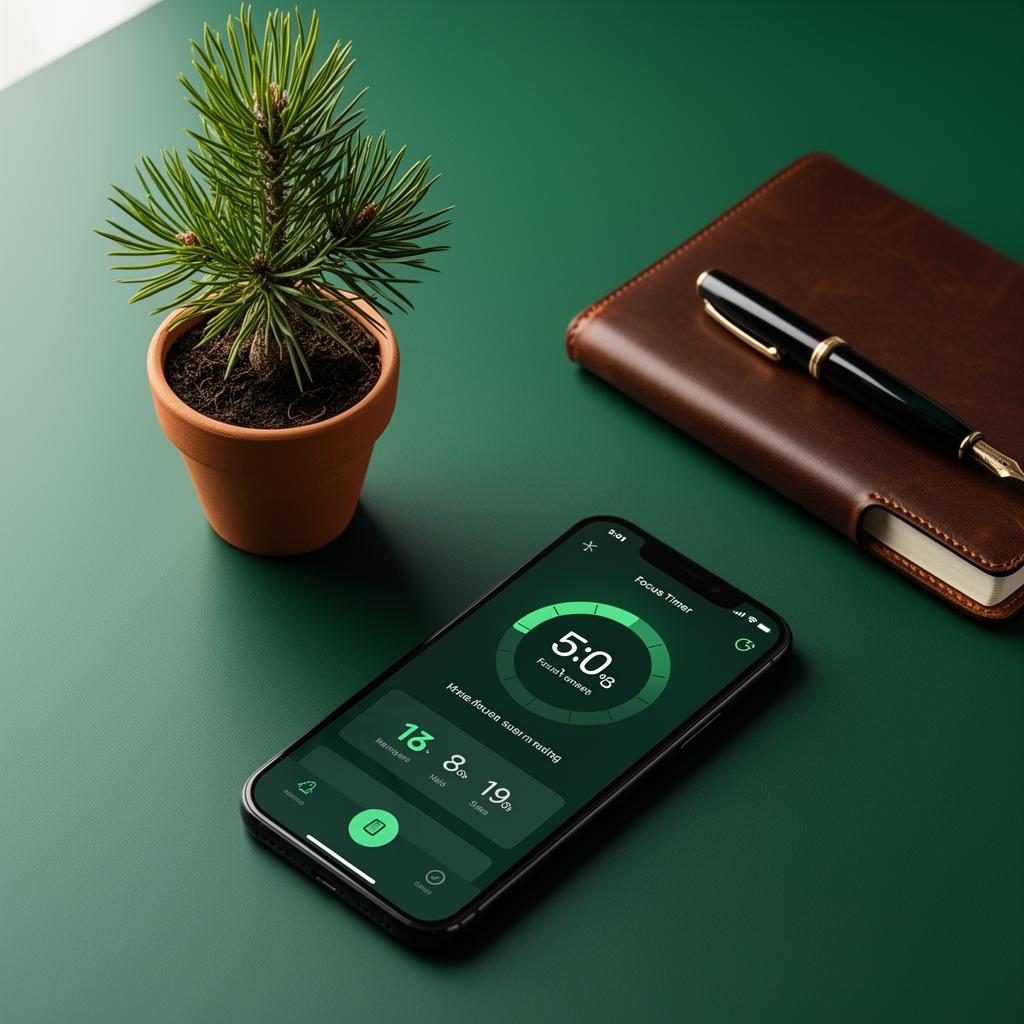
Most digital wellbeing advice assumes the goal is abstinence. In practice, durable change comes from designing days that gently reduce friction around the activities you value, while adding mild friction to the activities you do not. The aim is not zero screen time; it is intentional screen time.
Beyond the all-or-nothing trap
Most digital wellbeing advice assumes the goal is abstinence. In practice, durable change comes from designing days that gently reduce friction around the activities you value, while adding mild friction to the activities you do not. The aim is not zero screen time; it is intentional screen time.
A practical morning blueprint
Begin with a thirty-minute, phone-free window after waking. Use a physical alarm or a simple bedside clock to remove the temptation to begin the day inside an inbox. Forest's morning focus session, paired with a short stretch or walk, is a particularly grounded way to start.
Anchoring deep work in the day
Mid-morning is the cognitive peak for most adults. Reserve one to two ninety-minute blocks for genuinely demanding work, supported by a focus session and a closed door. Block-based scheduling protects these windows more reliably than vague intentions.
Evening wind-down
Replace late scrolling with a low-stimulation activity—reading, journalling, conversation. Forest's evening sessions can frame this as a gentle ritual rather than a deprivation. Within a fortnight, most readers report falling asleep noticeably earlier without any conscious effort.
"The best productivity tools are the ones you stop noticing. They become part of the rhythm of a good day rather than the subject of it." — FocusView editorial
If this article was useful, you may also enjoy our in-depth expert review of Forest, or browse more writing in our editorial journal.